Perfect Hard-Boiled Eggs (Without the Green Ring!)
Introduction
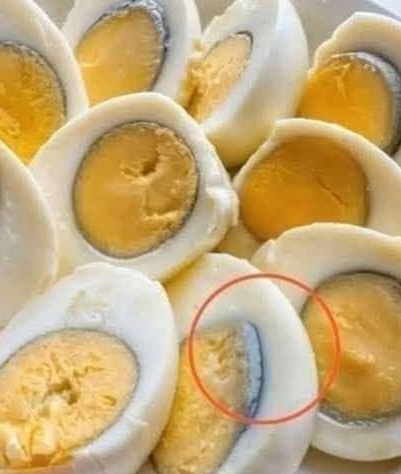
Have you ever peeled a hard-boiled egg only to find a dull, greenish-gray ring circling the yolk? Many assume it’s a sign of spoilage, but in reality, it’s simply a harmless result of overcooking or high heat causing a reaction between the egg’s iron and sulfur.
This guide not only explains the phenomenon but also gives you a perfect, foolproof “recipe” for flawless, tender, bright-yellow hard-boiled eggs—no green ring, no chalky texture, just perfection.
Ingredients & Quantities
6 large eggs
Water, enough to cover eggs by 1 inch
1 teaspoon salt (optional, helps with peeling)
1 cup ice + 2 cups cold water (for the ice bath)
Instructions
1. Prepare the Pot
Place eggs in a single layer in a saucepan. Add enough cold water to cover them by at least 1 inch.
2. Heat Gently
Bring the water to a gentle boil over medium heat—not a rapid boil.
3. Remove From Heat
Once small bubbles appear and it begins to boil lightly, cover with a lid and turn off the heat.
4. Set a Timer
Let the eggs sit covered for:
9–10 minutes for fully set yolks
7–8 minutes for medium-set
6 minutes for jammy centers
5. Cool Immediately
Transfer the eggs to an ice bath for 5 minutes to stop the cooking and prevent the green ring.
6. Peel & Enjoy
Gently crack, roll, and peel under running water.
Origin & Cultural Significance
Eggs have long been a universal staple across cultures—simple, nourishing, and symbolically rich. Hard-boiled eggs appear in cuisines worldwide:
Jewish cuisine (Passover Seder symbolism),
Mediterranean mezze spreads,
Asian bento boxes,
American breakfasts and salads.
The phenomenon of the green ring has been understood since the early 20th century when food scientists began studying egg chemistry, turning what was once a kitchen mystery into common culinary knowledge.
Description
Perfectly cooked hard-boiled eggs should have:
A vibrant yellow yolk
A tender, smooth egg white
A clean aroma, not sulfuric
No greenish or gray discoloration
The dreaded green ring appears when eggs are overcooked, causing sulfur from the whites to react with iron in the yolks—harmless, but not ideal in appearance or texture.
Optional Additions
Seasoning mix: paprika, salt, black pepper
Herbed eggs: dill, parsley, or chives
Mayonnaise & mustard: instant deviled eggs
Drizzle of olive oil & lemon zest for a Mediterranean touch
Everything-bagel seasoning for a crunchy topping
Tips for Success
Start with cold water, not boiling water.
Always use an ice bath to stop residual cooking.
Older eggs peel more easily than fresh ones.
Don’t boil too aggressively; high heat causes cracking and green rings.
Store hard-boiled eggs unpeeled for up to 7 days.
Nutritional Information (per hard-boiled egg)
Calories: ~78
Protein: 6 g
Fat: 5 g
Carbs: 0.6 g
Vitamins: B2, B12, Vitamin D
Minerals: Iron, Selenium, Phosphorus
Eggs are nutrient-dense, high in protein, and excellent for meal prep.
Conclusion
A green ring around the yolk doesn’t mean a bad egg—it simply means it was cooked too long or at too high a temperature. With this gentle cooking method, you’ll get beautiful, bright, perfectly textured eggs every time.
Recommendation
Use these perfectly cooked eggs for salads, sandwiches, high-protein snacks, breakfast bowls, or quick meal prep. They’re inexpensive, versatile, and satisfying.
Embracing Healthful Indulgence
Celebrate the simplicity of whole foods. A perfectly cooked egg is proof that healthy eating doesn’t need to be complicated or restrictive—just mindful, balanced, and delicious. Savor each bite knowing you’ve mastered a timeless kitchen essential.