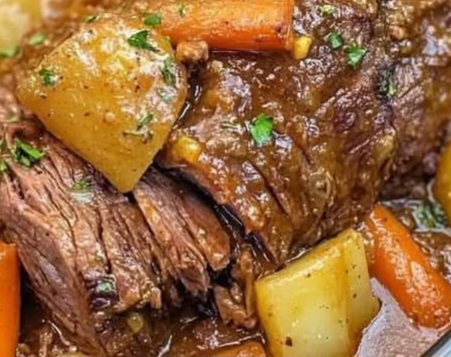
Classic Pot Roast
Introduction
Classic pot roast is the definition of comfort food — tender, slow-cooked beef infused with rich flavors from herbs, vegetables, and savory broth. It’s a hearty, satisfying dish that transforms a simple cut of meat into a melt-in-your-mouth family favorite. Perfect for cozy dinners, meal prep, or gatherings, pot roast fills the kitchen with irresistible aromas and delivers deep, home-cooked goodness.
Ingredients Quantity (Serves 6–8)
Main Ingredients
3–4 lbs (1.4–1.8 kg) beef chuck roast
2 tablespoons olive oil
1 teaspoon salt
1 teaspoon black pepper
1 teaspoon garlic powder
Vegetables
4 carrots, cut into chunks
4 potatoes, quartered
1 large onion, sliced
3 celery stalks, chopped
4 cloves garlic, minced
Cooking Liquid & Seasonings
2 cups beef broth
1 cup red wine (optional, can substitute more broth)
2 tablespoons tomato paste
1 tablespoon Worcestershire sauce
2 sprigs fresh rosemary (or 1 teaspoon dried)
3 sprigs fresh thyme (or 1 teaspoon dried)
2 bay leaves
Instructions
1. Prepare the Meat
Pat the roast dry and season generously with salt, pepper, and garlic powder.
2. Sear the Roast
Heat olive oil in a large Dutch oven over medium-high heat. Sear the roast on all sides until browned (about 3–4 minutes per side). Remove and set aside.
3. Sauté Aromatics
In the same pot, sauté onion, celery, and garlic for 3–4 minutes until fragrant.
4. Deglaze the Pot
Add red wine (if using) and scrape the browned bits from the bottom.
5. Build the Base
Stir in tomato paste, Worcestershire sauce, and beef broth.
6. Slow Cook
Return roast to the pot. Add carrots, potatoes, herbs, and bay leaves. Cover and cook:
Oven: 325°F (165°C) for 3–4 hours
Slow Cooker: Low for 8–9 hours or High for 5–6 hours
Stovetop: Simmer gently for about 3 hours
7. Finish & Serve
Remove bay leaves. Let roast rest 10–15 minutes before slicing or shredding. Serve with vegetables and cooking juices.
Origin and Cultural Significance
Pot roast has roots in European slow-braised meat traditions, particularly French “boeuf à la mode” and German braising methods. Immigrants brought these techniques to America, where tougher cuts of beef became popular for long, slow cooking. Over time, pot roast became a staple of American home cooking — especially Sunday family meals — symbolizing warmth, togetherness, and hearty nourishment.
Description
Classic pot roast features fork-tender beef simmered slowly with root vegetables in a savory, herb-infused broth. The slow cooking process deepens flavor while breaking down the meat into juicy, succulent bites. The result is a rich, rustic dish that feels both simple and deeply satisfying.
Optional Additions
Mushrooms for earthy depth
Parsnips or sweet potatoes for sweetness
Pearl onions for a gourmet touch
A splash of balsamic vinegar for extra richness
Fresh parsley for garnish
Crushed red pepper flakes for mild heat
Tips for Success
Choose well-marbled chuck roast for best tenderness.
Don’t skip searing — it builds deep flavor.
Cook low and slow; rushing makes meat tough.
Keep liquid about halfway up the roast — not fully submerged.
Let the roast rest before slicing to keep juices inside.
Nutritional Information (Approximate per serving)
Calories: 450–550 kcal
Protein: 35–40 g
Fat: 22–28 g
Carbohydrates: 20–25 g
Fiber: 3–4 g
Sodium: 600–800 mg
(Values vary based on ingredients and portion size.)
Conclusion
Classic pot roast is timeless comfort food — simple ingredients transformed through patience and slow cooking into a deeply flavorful, nourishing meal. It’s reliable, satisfying, and perfect for both weeknight dinners and special family gatherings.
Recommendation
Serve with crusty bread or buttered egg noodles to soak up the rich gravy. A crisp green salad or steamed green beans balance the hearty flavors beautifully. Leftovers make excellent sandwiches or shredded beef bowls.
Embracing Healthful Indulgence
Enjoy pot roast as a wholesome, balanced comfort meal by loading up on vegetables, trimming excess fat, and controlling portion sizes. The dish offers high protein, essential minerals, and deep satisfaction — proving that indulgent foods can still fit into a mindful, nourishing lifestyle.