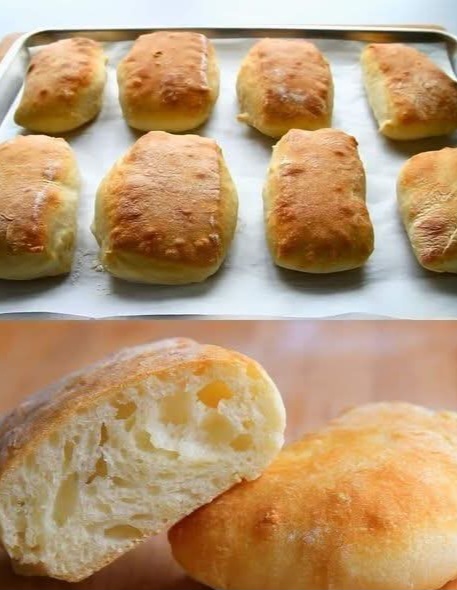
Don’t Buy Bread Anymore! The Easiest Homemade Ciabatta Bread Recipe
Introduction
If you’ve ever wanted to bake bakery-quality bread right in your kitchen, this Easy Ciabatta Bread is your new go-to recipe. With its irresistibly crisp crust, chewy interior, and signature airy texture, ciabatta is perfect for sandwiches, bruschetta, or simply enjoyed warm with olive oil. This no-fuss recipe requires just a few pantry staples and delivers an authentic Italian experience at home — fresh, aromatic, and deliciously rustic.
Ingredients & Quantity
500 g (3 ⅓ cups) bread flour
5 g (1 teaspoon) salt
5 g (2 teaspoons) active dry yeast
375–400 ml (1 ½–1 ⅔ cups) warm water (start with 375 ml and add more as needed)
30 g (2 tablespoons) olive oil
Instructions
1. Activate the Yeast:
In a large bowl, combine the warm water (not hot) with the yeast. Let it sit for about 5–10 minutes until foamy.
2. Mix the Dough:
Add the flour and salt to the yeast mixture. Stir with a wooden spoon or spatula until combined into a sticky dough.
3. Add Olive Oil:
Pour in the olive oil and mix gently until incorporated. The dough should be wet and slightly sticky — that’s what gives ciabatta its open crumb.
4. First Rise:
Cover the bowl with plastic wrap or a damp towel. Let the dough rise at room temperature for 1.5 to 2 hours, or until doubled in size.
5. Shape the Dough:
Lightly flour your work surface. Gently turn out the dough without punching it down to preserve the air bubbles. Shape it into a rectangular loaf or divide it into two smaller loaves.
6. Second Rise:
Place the shaped dough on a parchment-lined baking sheet. Cover loosely and let rise for another 30–45 minutes.
7. Bake:
Preheat your oven to 220°C (425°F). Bake for 25–30 minutes or until golden brown and crisp. Tap the bottom — it should sound hollow.
8. Cool:
Let the ciabatta cool on a wire rack before slicing to retain its soft, chewy texture inside.
Origin and Cultural Significance
Ciabatta, meaning “slipper” in Italian (a nod to its flat, elongated shape), was first created in 1982 in Veneto, Italy. It was Italy’s answer to the popular French baguette — offering the same crusty exterior but with a lighter, more porous interior. Over time, ciabatta became a staple across Europe and the U.S., cherished for its versatility in sandwiches, panini, and as a side to soups and pastas. Baking ciabatta at home continues a proud Italian tradition of simple, artisan breadmaking.
Description
This ciabatta loaf boasts a golden crust, a soft, airy center, and that distinct olive oil aroma that makes every bite a pleasure. Its texture is both chewy and light — perfect for soaking up sauces or pairing with savory toppings. When fresh from the oven, it’s a sensory delight of warmth, crunch, and aroma.
Optional Additions
🌿 Herb Infusion: Add rosemary, oregano, or thyme for a Mediterranean flair.
Garlic Touch: Mix minced garlic into the dough or brush garlic-infused olive oil over the crust before baking.
Cheesy Upgrade: Sprinkle shredded Parmesan or mozzarella before baking for a crispy, cheesy crust.
🍅 Sun-Dried Tomatoes: Fold chopped sun-dried tomatoes into the dough for extra flavor and color.
Tips for Success
Use bread flour, not all-purpose, for best gluten structure and open crumb.
Keep the dough wet and sticky — resist adding too much flour.
For extra crustiness, place a pan of hot water in the oven while baking to create steam.
Always let the bread cool completely before slicing to avoid a gummy texture.
Store in a paper bag or bread box (not plastic) to keep the crust crisp.
Nutritional Information (Per Slice – Approx. 1/10 of Loaf)
Calories: 180 kcal
Carbohydrates: 32 g
Protein: 5 g
Fat: 4 g
Fiber: 1.5 g
Sugar: 0.5 g
Sodium: 190 mg
Conclusion
This easy ciabatta bread recipe proves that artisan baking doesn’t have to be complicated. With minimal effort and simple ingredients, you can enjoy fresh, homemade bread that’s better than store-bought — wholesome, fragrant, and full of character.
Recommendation
Serve your ciabatta warm with olive oil and balsamic vinegar, use it for Italian-style sandwiches, or slice and toast it for bruschetta topped with fresh tomatoes and basil.
Embracing Healthful Indulgence
Homemade bread is an act of self-care — nourishing your body while delighting your senses. When you bake ciabatta yourself, you control every ingredient, avoiding preservatives while embracing the wholesome joy of simple, fresh food. Enjoy every bite with gratitude and the satisfaction of creating something real and delicious.